
On this page
What 'Ready' Means for Your Electrical System
A home is ready for an EV charger when the panel has enough spare capacity, room for a new 240-volt breaker, and a reasonable path to where you'll park. Most Jacksonville homes with a 200-amp panel check those boxes. Older homes with 100-amp service often need a closer look first.
Ready means your electrical panel can take on one more big job without strain. That's the short answer. An EV charger is one of the largest loads in a house, right up there with your AC and electric dryer. So the question isn't just "is there power?" It's whether there's enough left over.
Here's what we look at when we walk into your garage.
- Panel size: Most newer homes have 200-amp service. Plenty of older ones still run on 100 amps.
- Open breaker space: A Level 2 charger needs a double-pole breaker, so two open slots in the panel.
- Spare capacity: A load calculation, which checks if your panel can handle the new circuit on top of everything else you already run.
- Distance to your parking spot: Longer wire runs need thicker wire, and that changes the job.
- Panel condition: Rust, scorch marks, or an outdated brand can stop the install before it starts.
The load calculation is the one most people have never heard of. But it matters most. We add up your AC, water heater, range, dryer, and pool pump if you have one. Then we see what's left for the charger. The National Electrical Code treats EV charging as a continuous load. So the circuit has to be sized at 125% of what the charger pulls.
What does that look like in real life? A 40-amp charger needs a 50-amp circuit. That's a lot of room to find in a 100-amp panel.
We see this all the time in older Jacksonville neighborhoods built in the 1950s and 60s. The house runs fine, the panel just has nothing left to give. A homeowner called us last year sure they needed a whole new service. Turns out a smaller 32-amp charger setting fit their load just fine, no upgrade needed. Not every house gets that lucky, but it's worth checking before you assume the worst.
Newer homes in places like Nocatee or the communities off Beach Boulevard usually have 200-amp panels. Many sit right in the garage wall. That's close to ideal. Short wire run, plenty of space, quick install.
Location changes things too. A garage install is simple. A driveway spot means an outdoor-rated charger, a weatherproof box, and wire that can handle Florida rain and hurricane season. And if you're in an HOA, there may be rules about where an outdoor unit can be mounted.
One thing ready doesn't mean: doing it yourself. Every EV charger circuit installation in Jacksonville needs a permit and an inspection. We handle both for you.
Not sure where your panel stands? That's normal. Most people can't tell by looking, and they shouldn't have to. Snap a photo of your panel label and send it our way. Owner Vlad (license ER13016446) or one of our team can usually tell you a lot from that alone.
Signs Your Electrical Panel May Need an Upgrade
Your electrical panel is the first thing we check before any Level 2 EV charger installation. A Level 2 charger usually needs its own 240-volt circuit. That circuit often runs at 40 to 60 amps. That's a big new load for any home.
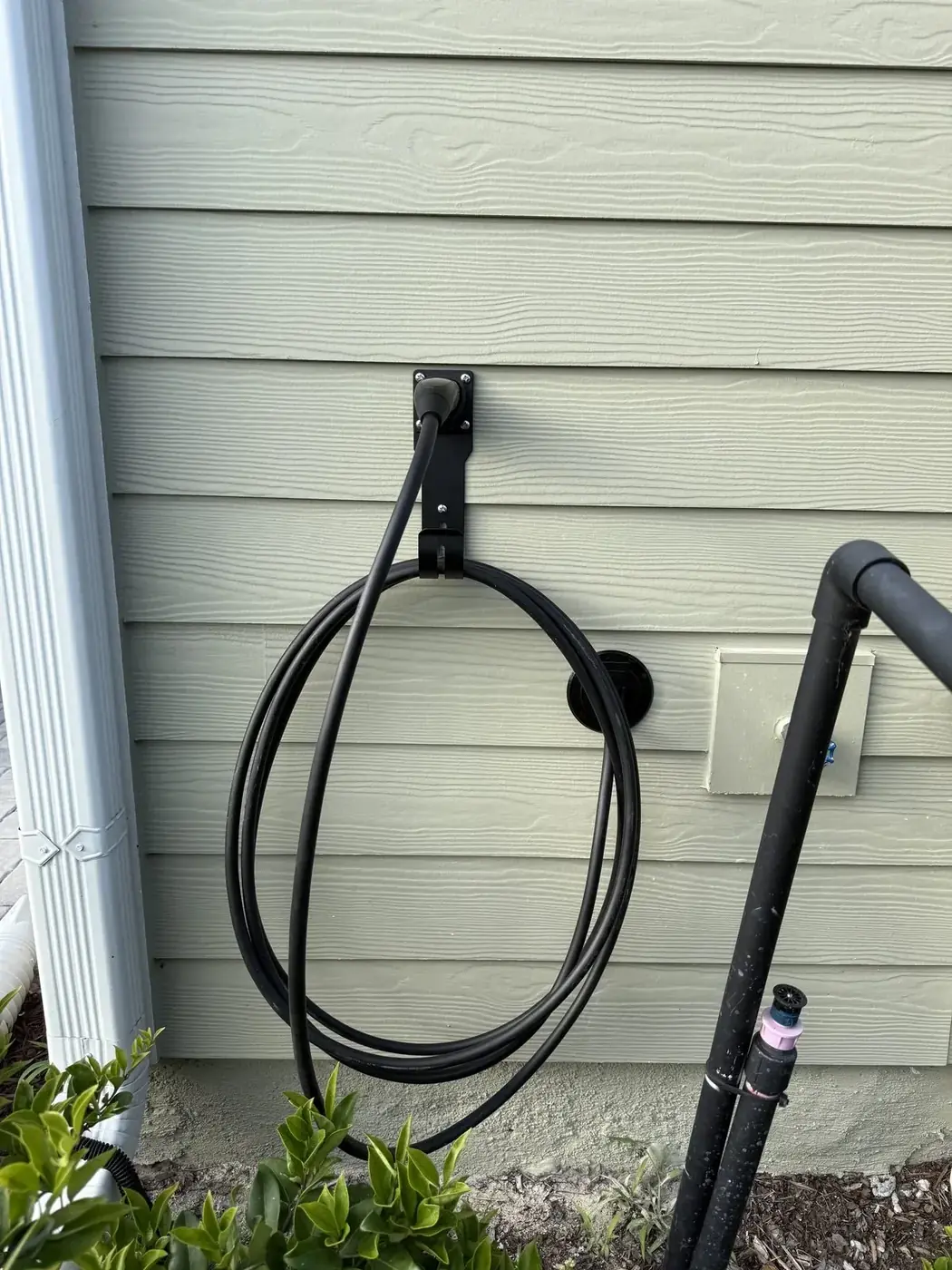
Good news first. Plenty of Jacksonville homes already have room to spare. But some panels show clear signs they're close to their limit.
Here's what to look for when you open your panel door or think about how your power behaves day to day:
- Your main breaker says 100 amps or less. Many older homes in Riverside, Avondale, and Arlington still run on 100-amp service.
- Breakers trip when the AC and dryer run at the same time.
- There are no open slots left, or you see skinny double breakers squeezed in to make room.
- Lights dim or flicker when a big appliance kicks on.
- The panel feels warm, buzzes, or has rust or scorch marks.
- You still have a fuse box instead of breakers.
Rust is a big one here. Jacksonville's humidity gets into garage and outdoor panels, and corroded parts can't grip a breaker tight. We see this a lot in homes near the river and the beaches. Salt air speeds it up.
If you smell burning or feel heat at your panel, call an electrician today.
Open slots alone don't tell the whole story. So we do a load calculation, which checks if your panel can handle the new circuit on top of everything else. It adds up your AC, water heater, range, dryer, and pool pump. Then it shows how much room is really left.
Running a heat pump and a pool pump all summer? That eats up more of your panel than most people think.
We ran into this with a homeowner on the Southside. Their 150-amp panel had two open slots. On paper it looked fine. But the load calculation showed the AC and electric water heater already used most of it. So we ran a smaller 32-amp EV charger circuit and set the charger to match. They plug in at night and wake up to a full battery.
That's the part most people don't realize. A tight panel doesn't always mean a huge project. Sometimes a lower-amp circuit or a charger with power-sharing settings gets the job done. Other times your panel really does need work first, and we'll tell you that straight. If your service needs a change, JEA or FPL may need to be part of the plan too.
And think ahead to hurricane season. If a whole home generator or transfer switch is on your wish list, tell us during the visit. It's smarter to plan your panel space for both at once.
Owner Vlad (license ER13016446) or one of our electricians will check your panel in person. The estimate is free with no trip fee. The price we quote is the price you pay. We handle the permits and inspection for your charger install too.
Garage, Circuit, and Location Scenarios: What They Mean for Your Install
Where you park matters almost as much as what's in your panel. Two homes with the same panel can need very different work. It mostly comes down to distance and walls.
Here's the simple rule we use. The closer your parking spot is to your electrical panel, the simpler the job tends to be. Every extra foot means more wire, more drilling, and sometimes more digging.
So let's walk through the setups we see most around Jacksonville.
- Attached garage with the panel on the garage wall: The easiest case by far. Many newer homes on the Southside and in Nocatee are built this way, so the run is often just a few feet.
- Attached garage with the panel inside the house: Still very doable. We route the new circuit through the attic or along the wall, then mount the charger where your car's port lines up.
- Detached garage: This one takes more planning. We may need to run wire underground or check if the garage's existing feed can handle the added load.
- Driveway or carport with no garage: An outdoor EV charger installation works great here. The charger and connections need to be rated for outdoor use and Florida weather.
- Townhome or condo with a shared lot: Possible, but HOA and building rules usually come first. Parking spots far from your unit can mean a long run.
Notice a pattern? The hard part is rarely the charger itself. It's getting a safe, properly sized circuit from point A to point B.
We see this a lot in older homes in neighborhoods like Riverside, Avondale, and San Marco. The panel sits on the far side of the house, the garage is out back. That doesn't rule anything out, it just means we plan the route before we quote. A good route keeps wire runs short and hides them where they won't get bumped.
Field tip from Vlad: Before we visit, take a quick photo of your panel and another of where you park. Note which side your car's charging port is on. Those two details tell us more about your install than almost anything else.
Outdoor spots come with their own Jacksonville quirks. Summer storms roll in fast. And hurricane season means wind-driven rain hits walls that stay dry the rest of the year. We place outdoor chargers so the cord reaches your car without stretching across the driveway. We also keep them up and out of standing water.
But don't skip the HOA check. Plenty of communities in Jacksonville have rules about what you can mount on an outside wall facing the street. Some want approval first. A quick email to your HOA can save you a headache later.
One more thing people miss: your utility. Whether you're on JEA or FPL, a bigger electrical change may need coordination with them. It's not common for a single charger. But we check, so you don't have to.
Most setups are workable. Truly.
We've done Level 2 EV charger installations in tight garages, open carports, and long driveways. Permits and inspections are handled for you. We clean up when we're done, and the price we quote is the price you pay.
Frequently Asked Questions
How do I know if my house can handle an EV charger?
You know your house can handle an EV charger when your panel has open breaker space and enough spare capacity left after your AC, dryer, and other big appliances. A load calculation shows this clearly. Most 200-amp panels in newer Jacksonville homes pass easily. Older 100-amp panels often need a closer look first. Send a photo of your panel label and our team can usually tell you a lot before we even visit. This is covered in detail on our EV charger install page.
Do I need an RCD or RCBO for an EV charger?
Yes, EV charger circuits need proper breaker protection, and in the US that means a dedicated double-pole breaker sized to code. This is similar to the RCD or RCBO requirement used in other countries. The National Electrical Code treats EV charging as a continuous load, so the breaker must be sized at 125% of what the charger pulls. A licensed electrician checks this during your panel inspection, so you don't have to guess at the right protection yourself.
How long does it take for an EV charger to be installed?
Most Level 2 EV charger installs take a few hours once the panel check is done and parts are on hand. Simple garage jobs with an existing 200-amp panel move fast. Jobs needing a panel upgrade or a longer wire run to a driveway spot take more planning. Permits and inspections add time on the back end, but a licensed Jacksonville electrician handles that paperwork so you're not stuck waiting and guessing.
Do I need to install an EV charger at home, or can I just use a regular outlet?
You can plug into a regular outlet, but it charges very slowly compared to a dedicated 240-volt circuit. A standard outlet gives you a trickle charge overnight that may not fully refill your battery. A Level 2 charger on its own circuit charges much faster and is built to handle the steady load safely. Most Jacksonville homeowners find the dedicated circuit worth the upfront planning for daily convenience.
Does Jacksonville's climate affect whether my panel is ready for a charger?
Yes, Jacksonville's humidity and salt air near the river and beaches can corrode older panels faster than inland homes. Rust and loose connections inside a panel can stop an install before it starts. This shows up more often in homes near the water or in older neighborhoods like Riverside, Avondale, and Arlington. A visual panel check catches this early, before any wiring work begins.
What's a common mistake homeowners make when judging their panel's readiness?
A common mistake is assuming open breaker slots mean your panel has enough power. Open space alone doesn't account for how much your AC, water heater, range, and pool pump already use. A load calculation is the only way to know what's really left for a charger. Skipping this step leads some homeowners to think they need a full panel upgrade when a smaller circuit would work fine.
Related
Keep reading: EV charger installation in Jacksonville, panel upgrades, How long EV charger installation takes. Or browse all of our electrical guides for Jacksonville homeowners.