
On this page
The Real Timeline: On-Site Hours vs. Total Project Days
Most Level 2 EV charger installs take about 2 to 4 hours of actual work at your home. The full project usually runs a few days to two weeks once you add the permit, scheduling and the city inspection. Long wire runs, outdoor mounts or a panel upgrade can stretch both numbers.
Here's the short answer. The work at your house is quick, the paperwork around it takes longer. Most people mix those two up, and that's where the confusion starts.
We'll break it into two clocks. One is on-site hours. That's how long our truck sits in your driveway. The other is total project days, from your first call to your first full charge.
On-site hours are usually short. For a garage charger mounted a few feet from your electrical panel, we're often in and out in 2 to 4 hours. That covers running the new circuit, mounting the charger, testing it and cleaning up. But a charger on the far side of the house is a different job. So is an outdoor charger by the driveway that needs conduit run along the wall or a trench dug across the yard. Those jobs can take most of a day.
Total project days are where the calendar fills up.
In Jacksonville, a new 240-volt circuit for an EV charger needs an electrical permit from the city. After the install, a city inspector has to come out and sign off. Neither step is hard. But you're waiting on someone else's schedule, not ours. Here's how a typical project flows from start to finish:
- Free estimate visit. We look at your panel, measure the wire run and check your parking spot. No trip fee.
- Load calculation. This checks if your panel can safely handle the new circuit. Most homes pass without changes.
- Permit filed. We pull the permit with the City of Jacksonville for you, so you don't touch the paperwork.
- Install day. This is the 2 to 4 hour window for most garage jobs, longer for outdoor or long runs.
- City inspection. The inspector checks our work, then you're cleared to charge.
Put together, most of our customers go from first call to charging in about one to two weeks. Some finish faster when the permit and inspection line up well.
What slows things down? A few local things come up again and again. If your panel is full or too small, you may need a panel upgrade. That often means working with JEA or FPL to schedule a power shutoff, and that adds days. HOA communities around Jacksonville sometimes want to approve an outdoor charger before it goes on the wall. And during hurricane season, a big storm can push everyone's schedule back, inspectors included.
We had a customer pick up a new EV on a Friday and call us that afternoon. The charger was close to the panel in the garage. We did the estimate the same day, filed the permit and had the install done early the next week. The inspection followed a few days later. He charged on a regular wall outlet in the meantime, slow but fine for his short commute.
That's the honest picture. Quick work at your house, a little patience for the city. We handle the permit and inspection so the waiting part isn't your problem.
Why Your Electrical Panel Decides Everything
Your electrical panel is the single biggest reason an EV charger install takes three hours or three weeks. Not the charger. Not the brand. The panel.
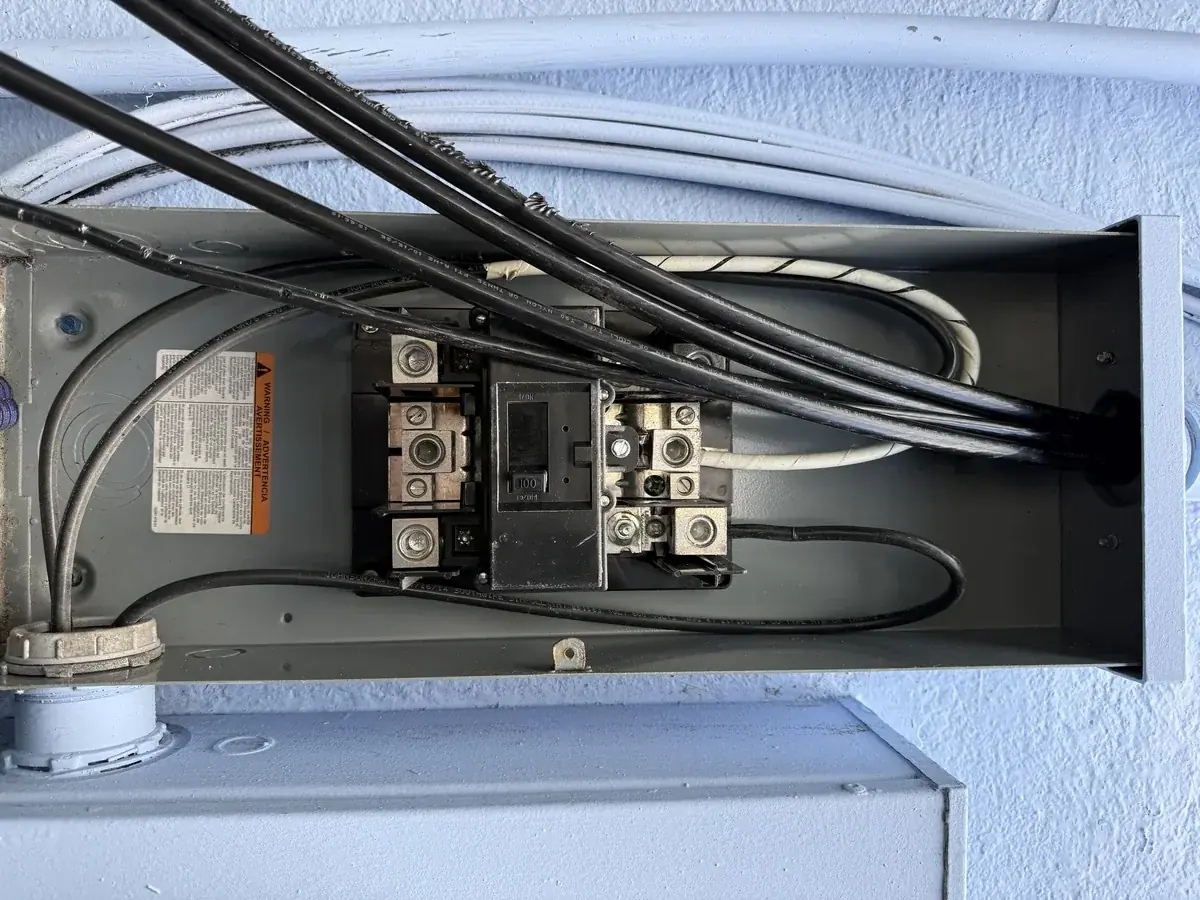
Here's why. A Level 2 charger pulls a lot of power for hours at a time. It usually needs its own 40 to 60 amp circuit. So before we run any wire, we need to know your panel can carry that load on top of everything else in your house.
That's where a load calculation comes in. It's a check that adds up what your home already uses, like your AC, water heater, dryer, and oven. Then it tells us if there's room left for the charger. In Jacksonville, the AC is the big one. It runs hard from May to October, and it eats a lot of your panel's capacity.
We do this check at the free estimate, so you're not left guessing.
Want a rough idea before we come out? Open your panel door and walk through these questions:
- Look at the main breaker at the top. Is it 200 amps? That's a good sign.
- Count the open slots. You'll need two empty spaces side by side for a 240 volt breaker.
- Check the label on the door for the brand and the year if it's listed.
- Think about how old your house is. Homes built before the 1980s often have 100 or 150 amp service.
- Notice any warm breakers, buzzing, or breakers that trip a lot. Tell us about those.
If you've got a 200 amp panel with open slots, you're in great shape. Most of those jobs are done in a single visit, often in two to four hours. We run the EV charger circuit, mount the charger in your garage or by the driveway, test it, and clean up.
But not every panel is that simple. We see a lot of original panels in older parts of town like Riverside, Avondale, San Marco, and Arlington. Those homes have character, they also tend to have smaller service. That's not a dealbreaker. It just changes the plan.
These are the things that usually add time:
- A panel with no open slots, which may need breakers rearranged or a subpanel
- 100 or 150 amp service that can't handle the extra load without changes
- Older panel brands that many inspectors and insurers flag for replacement
- Service upgrades that need JEA or FPL to schedule a disconnect and reconnect
- A long wire run from the panel to an outdoor driveway spot
The utility piece is the one people don't expect. If your service needs to change, JEA or FPL has to be involved. Their schedule isn't ours. That step alone can add days or even a couple of weeks, especially after a storm during hurricane season when crews are stretched thin.
And sometimes there's a simpler fix. A load management device can watch your home's power use and slow the charger down when the AC kicks on. For some homes, that skips the big panel work entirely. We'll tell you straight if it makes sense for your house.
Here's a real example. A homeowner called us sure they needed a whole new setup. Their house was from the 1970s, so they expected the worst. Turned out the panel had been replaced years back. Plenty of room. We had their charger working by lunch.
So don't assume. Let us look first.
What Can Add Time to a Jacksonville Installation
Most of the delay comes from your electrical panel, not the charger itself. Hanging the unit is the easy part. The real work is getting safe power from your panel to the spot where you park.
So before we quote anything, we do a load calculation. That checks if your panel can handle a new 40 or 50 amp circuit on top of everything else. In Jacksonville that "everything else" usually includes a big AC unit running hard from May through October.
Here are the things we see add time most often around town:
- A full or older panel that needs to be upgraded before the charger circuit goes in
- A long wire run, like a charger on the far side of a detached garage or at the end of the driveway
- Concrete block walls, common in Jacksonville homes, that take more time to drill through and route conduit along
- Trenching for an outdoor charger that sits away from the house
- A JEA or FPL service upgrade if your home's main service is too small
- HOA approval for a charger that's visible from the street
Not every home has these issues. Plenty of newer homes in places like Nocatee or Bartram Park have room in the panel and a garage wall right next to it. Those jobs often wrap up in a few hours.
Older homes are a different story. Some houses in Riverside, Avondale or San Marco still have small panels that were never built for an EV. We see this all the time, and it's nothing to panic about. It just means the job has two steps instead of one.
Here's a typical example. A homeowner calls us expecting a same-week install. We open the panel and find there's no space left for a new breaker. Now the plan is a panel upgrade first, then the charger circuit. The work itself might only take a day or two, but the permit and inspection add time on top.
Permits are the part people forget about.
An EV charger circuit in Jacksonville needs a permit and a city inspection. We pull the permit and schedule the inspection for you, so you don't have to deal with it. But the inspection date depends on the city's calendar, not ours. Most of the time it moves fast, some weeks it backs up.
And if a JEA or FPL service upgrade is involved, the utility sets that timeline. We coordinate with them, but we can't control their schedule.
What about your HOA? If you live in a community with strict rules on exterior equipment, ask for approval early. A charger inside the garage usually isn't an issue. An outdoor charger on the side of the house or near the driveway might need a sign-off first. We've watched good plans sit for weeks waiting on a board meeting.
Hurricane season matters too. After a big storm, electricians across Jacksonville get flooded with repair and generator calls. If you're thinking about an EV charger, booking before peak season in late summer is smart. Storm repairs tend to jump the line once a hurricane rolls through.
The good news is that almost all of this is something we can spot on the first visit. Our estimates are free with no trip fee. You'll know up front if your panel is ready, how long the wire run is, and whether a permit or HOA step will add time. The price we quote is the price you pay, even if the job takes a little longer than planned.
Frequently Asked Questions
How long does an EV charger installation take?
The hands-on work usually takes 2 to 4 hours, but the full project often runs one to two weeks. That extra time covers the electrical permit and the city inspection, not more work at your house. Garage chargers near the panel finish fastest. Outdoor chargers or long wire runs can push the on-site time closer to a full day. If you want a clearer timeline for your specific home, the EV charger installation page walks through what to expect before you book.
Why does my neighbor's install sound faster than what I'm being told?
Every home's panel is different, and that's the biggest reason timelines vary. A 200 amp panel with open slots lets most jobs finish in a single visit. Older panels, especially in neighborhoods like Riverside or Avondale, sometimes need extra work like a subpanel or rearranged breakers. That added step can turn a one-day job into a longer one. Your neighbor's fast install likely had a newer panel with room to spare.
Does Jacksonville's weather or utility setup slow down EV charger installs?
Yes, hurricane season can add delays if a storm pushes back inspector schedules. JEA and FPL also need advance notice for any service upgrade that involves a power shutoff, and that scheduling isn't something an electrician controls. Summer heat raises AC use too, which matters during your load calculation since the AC eats up panel capacity. Planning your install outside peak storm months can help things move faster.
Should I try to handle any part of the EV charger install myself?
No, the electrical and permit work should go to a licensed electrician. Jacksonville requires a permit for any new 240-volt circuit, and a city inspector has to sign off before you charge. A licensed electrician files that paperwork correctly and knows how to read your panel safely. Trying to skip steps can delay your inspection or create a safety issue in your garage.
What's a common misunderstanding about EV charger installation timelines?
Many homeowners assume the whole project takes as long as the actual wiring work, which is usually just a few hours. The real wait comes from permit filing and the inspector's schedule, both outside anyone's direct control. That's why a job can feel slow even though the electrician's part was quick. Knowing this upfront helps you plan your charging routine while you wait.
How do I know if my panel will cause delays before I even call someone?
Open your panel door and check the main breaker size and open slots first. A 200 amp panel with two empty slots usually means a smooth, fast install. Homes built before the 1980s often have smaller 100 or 150 amp service, which can need extra work. Warm breakers or frequent tripping are also signs worth mentioning to your electrician during the estimate.
Related
Keep reading: EV charger installation in Jacksonville, Can a regular electrician install an EV charger?, panel upgrades. Or browse all of our electrical guides for Jacksonville homeowners.