Serving Jacksonville, FL and surrounding areas📞 (904) 544-0434

GMC EV Charger Installation in Jacksonville, FL

Professional installation for all GMC electric vehicles throughout Jacksonville and St. Johns County.

Choose Your Gmc Model:

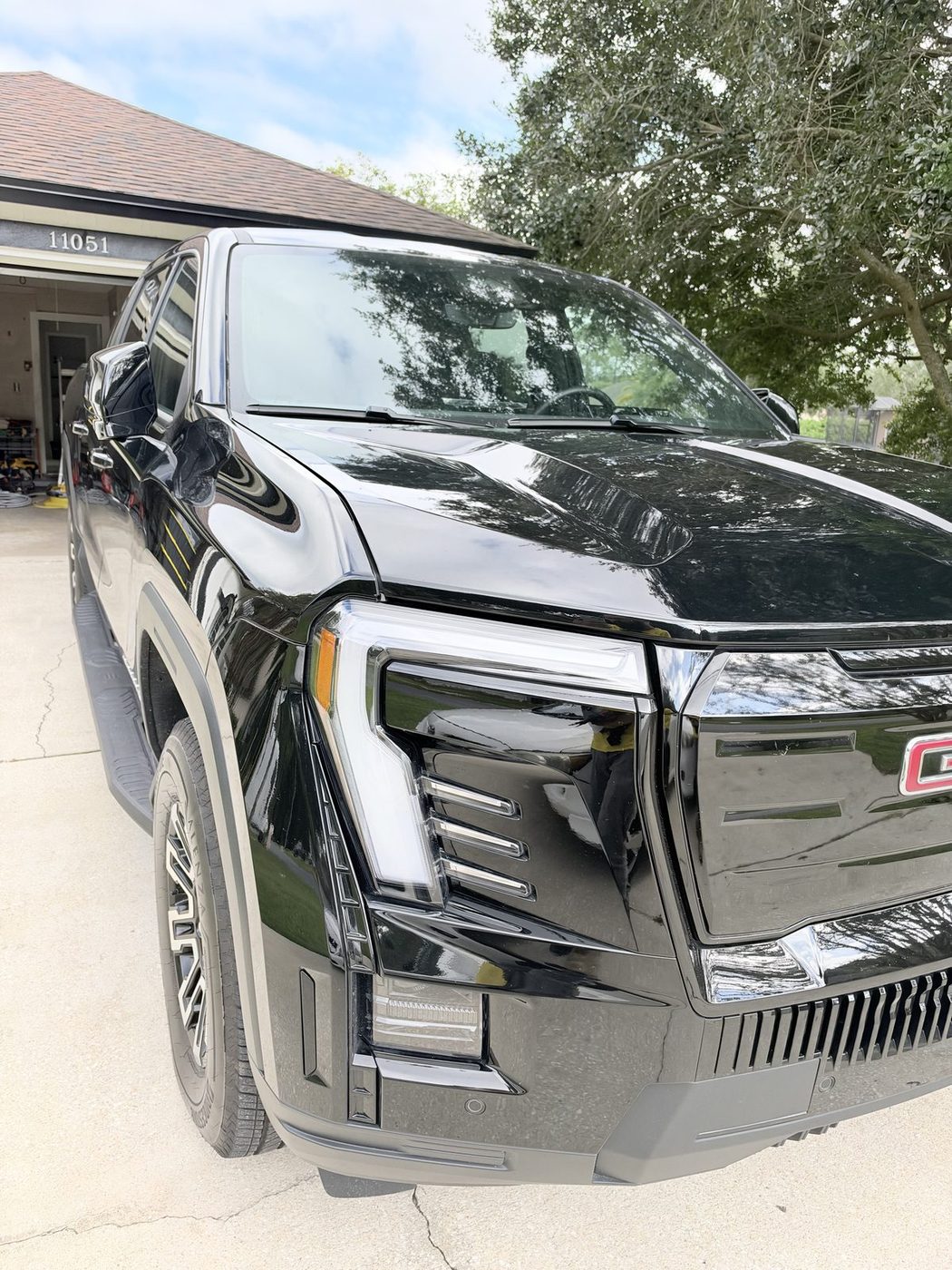
GMC Sierra EV parked at a home in The Gables, Mandarin, Jacksonville, FL after Pure Power Electrical installed its Level 2 EV charger
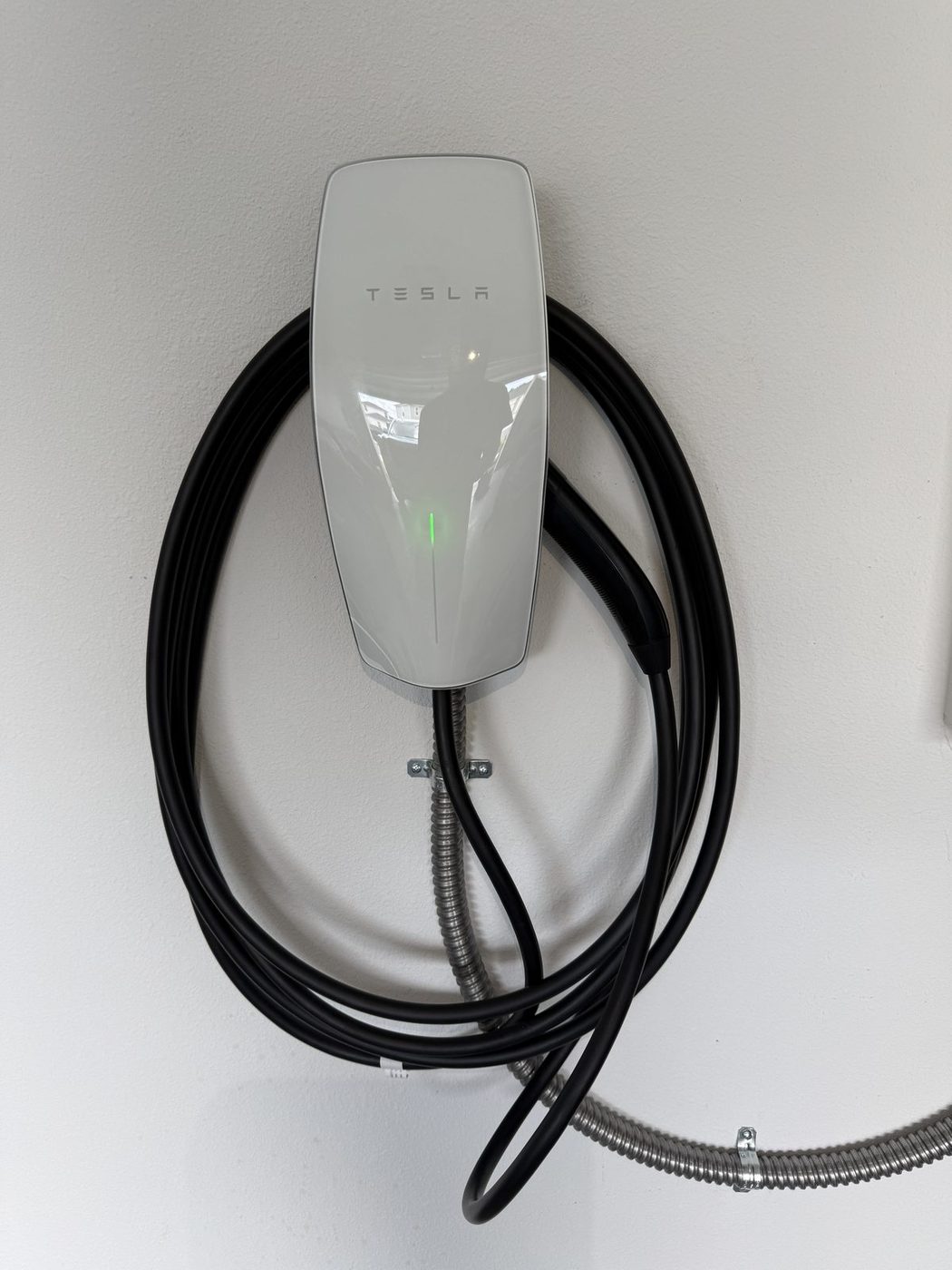
Tesla Wall Connector installed by Pure Power Electrical in Saddle Oaks, Northwest Jacksonville, FL

Schedule Your Installation

Licensed electricians • Same-day service • Free consultation

Get a Free Quote

Professional GMC EV Charger Installation in Jacksonville

Pure Power Electrical provides expert EV charger installation for GMC electric vehicle owners throughout Jacksonville FL, St. Johns County, Ponte Vedra, Orange Park, and the Beaches. Whether you drive a GMC and need a Level 2 home charger installed in your garage, carport, or driveway, our licensed electricians handle every aspect of your charging setup from initial consultation to final inspection.

We work with all GMC models and understand the specific electrical requirements for Level 2 (240V) charging systems. From assessing your electrical panel capacity and upgrading circuits if needed, to mounting the charger, running proper wiring, pulling permits with the City of Jacksonville, and coordinating final inspections, we manage every detail so your GMC charging installation is safe, code-compliant, and optimized for your daily driving routine.

GMC Models We Install Chargers For

We provide professional EV charger installation for all GMC electric and plug-in hybrid vehicles sold in the Jacksonville area:

Hummer EV Sierra EV

Each GMC model has specific charging requirements based on battery capacity and onboard charger specifications. Our licensed electricians are familiar with the electrical needs of different GMC vehicles and recommend the right charging solution for your specific model and daily driving patterns.

What Jacksonville GMC Owners Need to Know About Home Charging

Most GMC vehicles benefit significantly from a dedicated Level 2 (240-volt) home charger compared to the standard 120-volt outlet that comes with your vehicle. Level 2 charging delivers 25-30 miles of range per hour compared to just 3-5 miles per hour with Level 1 charging on a standard outlet.

Installing a Level 2 charger for your GMC in Jacksonville requires a dedicated 240-volt circuit, typically with a 40-50 amp breaker, depending on your charger specifications. Many Jacksonville homes have sufficient electrical panel capacity for this upgrade, but some older homes may need a panel upgrade to safely support EV charging alongside existing electrical loads.

Pure Power Electrical assesses your home's electrical system, recommends the right charger for your GMC model, and handles the complete installation including any necessary panel upgrades. We're familiar with Jacksonville building codes, JEA utility requirements, and the permit process, which means your installation goes smoothly without delays.

Our GMC Charger Installation Process

When you choose Pure Power Electrical for your GMC EV charger installation in Jacksonville, here's what to expect:

1. Initial Consultation & Site Assessment
We evaluate your electrical panel capacity, determine the best charger location for your GMC, discuss your charging needs based on daily driving distance, and provide upfront pricing with no hidden fees.

2. Charger Selection & Permitting
We help you choose the right Level 2 charger for your GMC model (or work with your preferred charger if you've already purchased one). We handle all permit applications with the City of Jacksonville and coordinate with JEA if utility work is required.

3. Professional Installation
Our licensed electricians install the dedicated circuit from your electrical panel, run conduit and wiring to the charger location, securely mount the charging unit, make all electrical connections, and test the system to ensure proper operation.

4. Inspection & Final Walkthrough
We coordinate with city inspectors for the final electrical inspection, walk you through how to use your new GMC charger, and ensure you're completely satisfied with the installation before we leave.
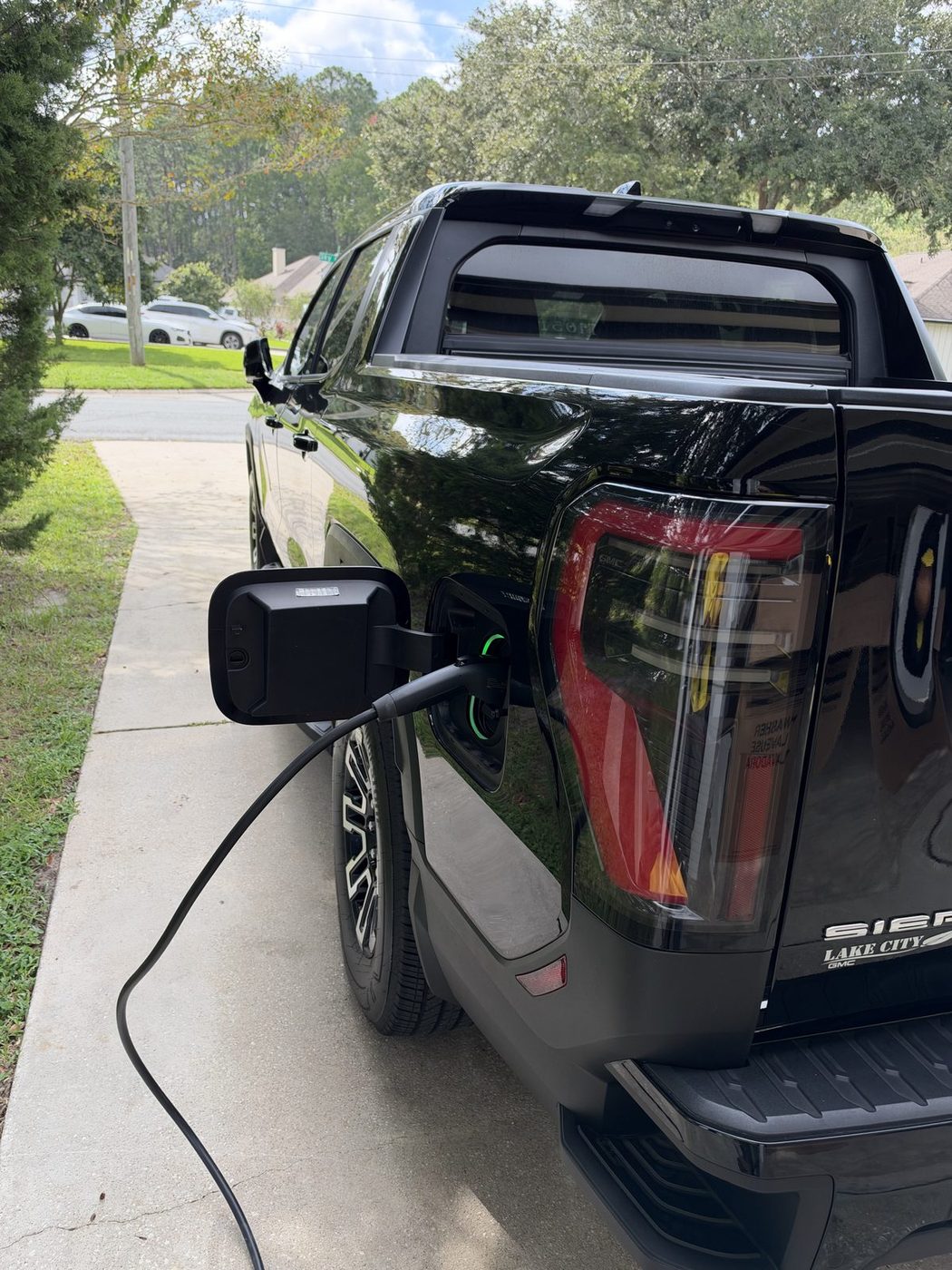
GMC Sierra EV charging from a Level 2 EV charger installed by Pure Power Electrical in The Gables, Mandarin, Jacksonville, FL

Why Jacksonville GMC Owners Choose Pure Power Electrical

Jacksonville GMC owners trust Pure Power Electrical for EV charger installation because we combine expertise in both electrical work and electric vehicle charging systems. We're not just electricians who dabble in EV chargers - we've installed hundreds of charging systems throughout Northeast Florida and understand the unique requirements of GMC vehicles.

Our licensed electricians are familiar with Jacksonville building codes, JEA utility coordination, and the specific electrical considerations for different GMC models. We provide same-day response when possible, upfront pricing with no surprises, and installations backed by our workmanship warranty. Every installation passes city inspection the first time.

We work efficiently, communicate clearly throughout your project, and leave your property clean. Whether you're installing in a garage, carport, outdoor location, or multi-car charging setup, we ensure your GMC charging system is done right.

Trusted by Jacksonville customers with excellent reviews on Google. When you need a GMC EV charger installed professionally, call Pure Power Electrical at (904) 544-0434.

Service Areas for GMC Charger Installation

We install GMC EV chargers throughout Northeast Florida including:

  • Jacksonville - All neighborhoods including Southside, Mandarin, San Jose, Arlington, Riverside, Avondale, San Marco, Baymeadows, Deerwood
  • Ponte Vedra - Nocatee, Del Webb Ponte Vedra, Sawgrass Country Club, TPC, Marsh Landing
  • St. Johns County - St. Augustine, Julington Creek, World Golf Village, Fruit Cove, Switzerland
  • Jacksonville Beaches - Jacksonville Beach, Neptune Beach, Atlantic Beach, Mayport
  • Orange Park & Clay County - Fleming Island, Middleburg, Green Cove Springs

Ready to install a charger for your GMC EV in Jacksonville? Call (904) 544-0434 for a free estimate. Licensed, insured, and trusted by Jacksonville EV owners.

GMC Electric Trucks Demand the Highest Home Charging Power in Jacksonville

GMC entered the electric vehicle market with vehicles that make a statement: the Hummer EV with its absurd performance specs and the Sierra EV bringing electrification to GMC's core truck lineup. Both are built on GM's Ultium platform, and both share a common electrical characteristic that matters enormously for home charging - they support up to 19.2kW Level 2 charging capability. That's the absolute upper limit for residential AC charging, and it requires electrical infrastructure most Jacksonville homes don't currently have.

The math tells the story: 19.2kW at 240 volts requires 80 amps of continuous current. By code, that means installing a 100-amp dedicated circuit for the charger. Not 40 amps like many EVs, not 60 amps like luxury models, but a full 100-amp circuit that's larger than many entire homes used to run on decades ago. This isn't a simple garage outlet installation - it's substantial electrical work that often requires panel upgrades and occasionally even utility service upgrades.

Why GMC Trucks Need Massive Charging Power

The Hummer EV packs over 200kWh of battery capacity in its top-spec configurations. That's more than double most EVs on the road. Even with the Sierra EV's slightly smaller packs (around 170kWh for the long-range versions), you're dealing with enormous energy storage that takes time to replenish. At standard 11kW Level 2 charging (typical for most EVs), fully charging a depleted Hummer EV would take 18-20 hours. That doesn't fit well into overnight charging windows.

At 19.2kW, that same charge takes roughly 10-12 hours - still substantial, but workable for overnight replenishment. For Sierra EV owners who actually use their trucks for work (towing, hauling, long drives), the ability to charge quickly at home matters. You can't afford multi-day charging sessions when the truck is your daily driver and work vehicle.

But here's the reality we discuss during Jacksonville site assessments: not everyone needs that full 19.2kW capability. If you're driving 50-60 miles daily and parking the truck in the garage every night, even an 11kW charger (48 amps) provides plenty of replenishment capacity. The question becomes whether you want maximum charging speed for those occasional full-depletion scenarios or if moderate charging speeds work fine for your typical usage.

Panel Capacity Requirements for 100-Amp EV Circuits

Adding a 100-amp circuit to your home's electrical system requires significant panel capacity. Most residential services in Jacksonville run 200 amps total. Now you're dedicating half of that theoretical capacity to EV charging (though actual load calculations account for demand factors and diversified loads). Still, it's common to need panel upgrades when adding this much new load.

Homes with older 100-amp or 150-amp service panels almost always need upgrades to 200-amp service before installing a 100-amp EV circuit. Even 200-amp panels sometimes need service upgrades to 225-amp or 320-amp when the existing household loads (HVAC, electric water heater, pool equipment, etc.) already consume substantial capacity. We run detailed load calculations during site assessments to determine exactly what's required.

Service upgrades mean coordinating with JEA, potentially replacing the meter base and service entrance conductors, upgrading the main panel, and scheduling multiple inspections. Timeline stretches from a simple charger install (1 week including permitting) to 2-4 weeks for full service upgrades. Costs increase accordingly, but it's essential infrastructure work that can't be shortcut without code violations and safety hazards.

Watts to Freedom and CrabWalk Don't Help Charging Speed

GMC markets the Hummer EV's performance capabilities heavily - Watts to Freedom launch control delivering 0-60 mph times under 4 seconds, CrabWalk diagonal driving mode, Extract mode for desert running. All impressive engineering, all completely irrelevant to your home charging installation. The electrical work is the same whether you're charging a stripped-down work truck or a fully loaded performance monster.

What matters electrically: battery capacity, onboard charger rating, your panel's available capacity, wire sizing for the circuit, proper conduit installation, correct overcurrent protection, and passing Jacksonville building inspections. The same fundamental electrical principles apply whether you're installing a charger for a Hummer EV or a Chevy Bolt - the GMC just needs substantially larger conductors and panel capacity to support its maximum charging rate.

Truck Owners Often Have Different Charging Patterns

We've noticed different charging behavior patterns with truck owners compared to sedan or SUV EV owners. Trucks often get used for work - towing trailers, hauling materials, long job-site drives. That creates more variable daily range consumption and more frequent deep discharge scenarios where you actually use the full battery capacity.

Sedan owners typically drive predictable commute patterns - 30-50 miles daily, parked overnight, charging to 80%, rarely depleting below 20%. Their charging needs are consistent and manageable with moderate charging speeds. Truck owners might use 40 miles one day and 200 miles the next depending on job requirements. That variability makes high-power home charging more valuable.

It also makes installation planning more critical. If your Sierra EV is your work vehicle and you need it ready every morning, you can't afford electrical issues that prevent overnight charging. The installation needs to be robust, code-compliant, and reliable - proper conductor sizing with no voltage drop, secure terminations that won't loosen over time, and appropriate overcurrent protection.

Charger Placement for Large Trucks in Jacksonville Garages

GMC trucks are physically large. The Hummer EV is nearly 18 feet long and over 7 feet wide. The Sierra EV runs slightly smaller but still dwarfs most passenger cars. Garage clearances matter when planning charger placement - you need adequate space to park the truck, open doors for entry/exit, and route the charging cable to the charge port without the cable stretched tight across walkways.

The Hummer EV's charge port is located on the driver's side rear quarter panel. The Sierra EV places it similarly. That typically means mounting the charger on the side wall of the garage rather than the front wall, with cable lengths of 20-25 feet to provide parking flexibility. Longer cables cost more and create cable management challenges, but they're often necessary for large vehicle installations.

Outdoor driveway charging is less common for expensive trucks (most owners prefer garaged parking for security and weather protection), but we've installed plenty of outdoor chargers for work trucks and fleet scenarios. Requires NEMA 3R or 4 rated equipment rated for Florida sun, rain, and humidity. The same electrical principles apply - just add weatherproofing and budget extra for conduit protection.

Do You Actually Need 19.2kW Charging at Home?

Here's the honest conversation we have with GMC electric truck owners: most people don't actually need maximum charging speed at home. If you're driving 60-80 miles daily (which represents the upper end of typical usage for most people), an 11kW charger replenishes that overnight easily. Even 100 miles of daily driving recharges in about 3 hours at 11kW, which fits comfortably into evening/night parking hours.

Where 19.2kW charging makes sense: commercial fleet scenarios with multiple shifts requiring fast turnaround, owners who frequently deplete the full battery capacity and need same-day recharging, or people who want absolute maximum charging speed regardless of cost. For that last group, the panel upgrade and installation costs are worth it for the peace of mind knowing they can charge as fast as physically possible on residential power.

But many Hummer EV and Sierra EV owners we work with in Jacksonville opt for 60-amp (11-11.5kW) installations that cost significantly less, don't require panel upgrades, and still provide fast overnight charging. We present both options with accurate pricing and let you make the informed decision based on your actual usage patterns and budget.

Jacksonville's Truck Market and Electric Adoption

Trucks dominate Northeast Florida roads - F-150s, Silverados, Rams, Tundras everywhere you look. Electric trucks are still a tiny fraction of that market, but GMC's entry (alongside Ford's F-150 Lightning and the upcoming Silverado EV) signals where the industry is heading. As someone who wires charging infrastructure, the trend is clear: truck owners are starting to consider electric seriously.

The infrastructure challenge is real. Installing 100-amp circuits routinely requires panel upgrades that double or triple the project cost compared to standard EV charger installations. That's a barrier for adoption, but it's also the reality of physics and electrical code. You can't pull 80 amps continuously through undersized conductors or overloaded panels - it creates fire hazards and equipment damage.

We handle these installations properly: accurate load calculations, appropriately sized conductors (typically 1/0 or 2/0 aluminum for 100-amp circuits), correct panel sizing, JEA coordination when required, pulling permits, passing inspections. The work costs more than simpler installations, but it's done right and serves you safely for decades.

Why Electrical Experience Matters for High-Power Installations

A 100-amp circuit installation is significantly more complex than a standard 40-50 amp EV charger circuit. The conductors are thicker and harder to work with. Terminations require more care. Load calculations become critical. Panel capacity limitations appear more frequently. Mistakes have higher consequences.

We've installed hundreds of EV chargers across the full range of power levels throughout Jacksonville and St. Johns County. Licensed electricians (ER13016446), insured, and experienced with local code requirements and permitting processes. The work passes inspection the first time because we follow code requirements exactly.

If you've ordered a Hummer EV or Sierra EV, call us at (904) 544-0434 before it arrives for a site assessment. We'll evaluate your electrical infrastructure, discuss charging options honestly, provide accurate pricing for both moderate and maximum-power installations, and let you make an informed decision. No pressure toward the most expensive option - just clear information about what's required and what makes sense for your situation.

Pure Power Electrical Contractor LLC
ER13016446 - Licensed & Insured
Serving Jacksonville, St. Johns County, and Northeast Florida
(904) 544-0434

How would you like to reach us?

📞 Call (904) 544-0434 💬 Text (904) 544-0434